

Quick answer
COWS is a simple memory aid for checking whether a casualty is conscious and responsive. It stands for Can you hear me? Open your eyes. What is your name? Squeeze my hand. It is used at the Response step of the DRSABCD action plan. If there is no response to any of these, treat the person as unresponsive: send for help on Triple Zero (000) and move on through DRSABCD.
When you reach a collapsed person, the first thing to establish is whether they are conscious. COWS is the quick, ordered check first aiders use to do exactly that. This short guide explains what COWS stands for, how to run the check, and where it fits in the wider DRSABCD action plan used across Australia.
What does COWS stand for in first aid?
COWS is an acronym for four prompts you give the casualty, in order, to check for a response: Can you hear me? Open your eyes. What is your name? Squeeze my hand. It is a way to remember the standard "talk and touch" response check — ask questions and give simple commands, then gently squeeze the shoulders if there is still no answer.
| Letter | Prompt | What it checks |
|---|---|---|
| C | Can you hear me? | Whether the person responds to your voice. |
| O | Open your eyes. | Whether they can follow a simple command. |
| W | What is your name? | Whether they are alert and oriented. |
| S | Squeeze my hand. | Whether they respond to touch and can follow a motor command. |
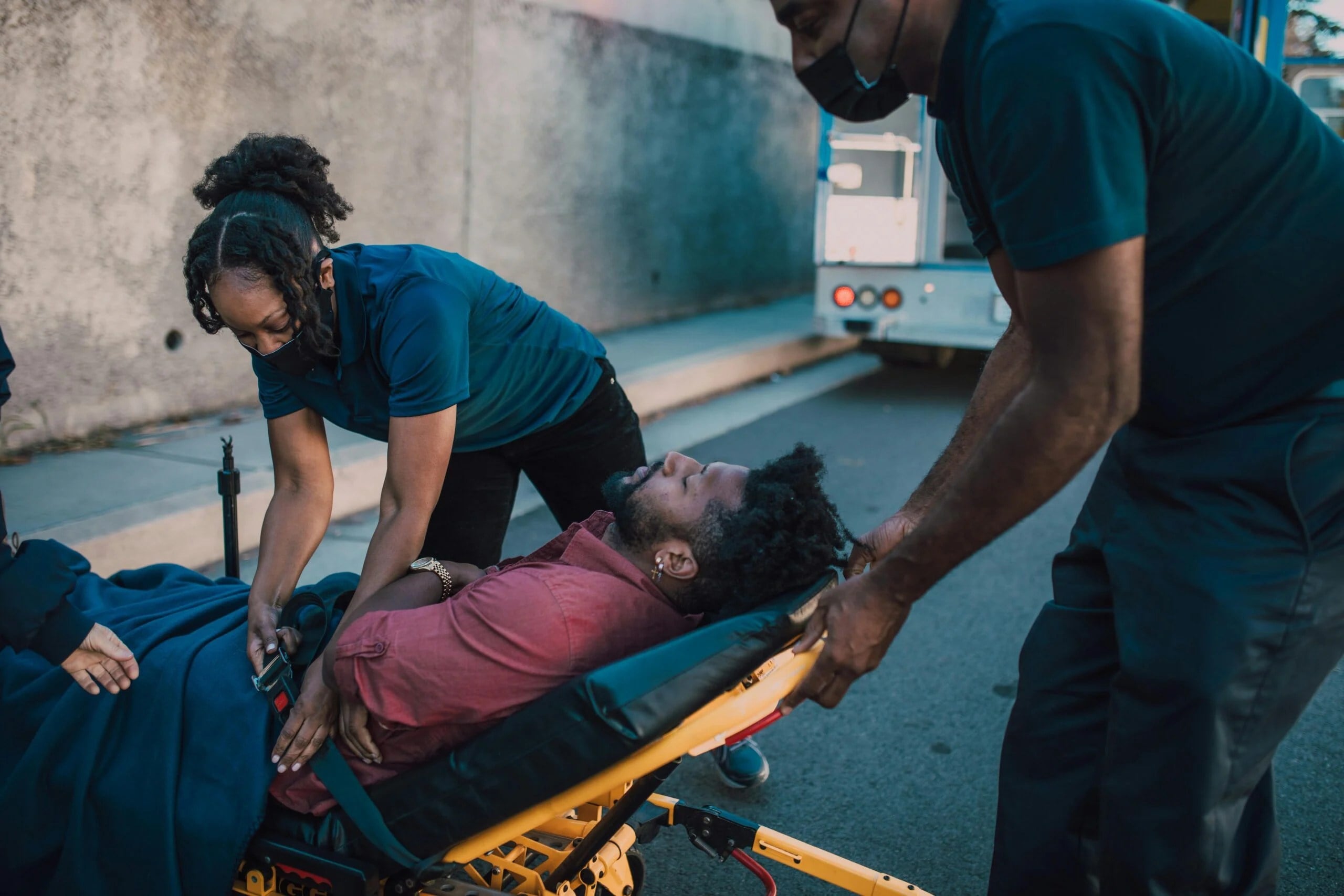
The COWS check, step by step
Run the four prompts in order, giving the person a moment to respond to each:
| Step | What you do |
|---|---|
| 1 | Loudly ask, "Can you hear me?" |
| 2 | Ask them to "Open your eyes." |
| 3 | Ask, "What is your name?" |
| 4 | Ask them to "Squeeze my hand," and gently squeeze their shoulders if there is no answer. |
Two outcomes: a response of any kind means the person is conscious — reassure them and check for injuries. No response to any prompt means they are unresponsive — send for help and continue through DRSABCD.
When to use COWS — the Response step of DRSABCD
COWS is how you carry out the R (Response) step of the DRSABCD action plan, the basic life support sequence used in Australian first aid. After you have checked for Danger and made the area safe, you reach the casualty and run the COWS check. What you find next decides the rest of your response.
What to do if there is no response
If the person does not respond to any COWS prompt, treat them as unresponsive. Send for help by calling Triple Zero (000), then continue through DRSABCD: open the Airway, check Breathing, and if they are unconscious but breathing normally, place them in the recovery position. If they are not breathing normally, start CPR.
While you wait for the ambulance, check the person's wrist and neck for a medical ID. A medical ID can tell a responder what they cannot ask an unresponsive patient — conditions, medications and who to contact — and it may carry a membership number for an online medical records service such as MedibandPlus.
Part of the Mediband family. Designed in Australia since 2004.
Related reading: the full DRSABCD first aid action plan and the recovery position. When you are ready, you can start a MedibandPlus membership.
What if they do respond?
Most first aid guidance rushes past this, because the dramatic branch is the one where nobody answers. But a response is not automatically reassuring — what matters is the quality of it.
If the person responds to any part of COWS, they are not fully unresponsive. That rules out starting CPR. It does not rule out an emergency.
- A clear, correct answer — they say their name, open their eyes, squeeze on request. Reassuring, but keep watching them.
- A groan, a flicker, a weak squeeze. This is a partial response, and it is a serious sign. Treat them as someone who is deteriorating, call 000, and stay with them.
- Confused or slurred speech. They are responding, but not normally. Think stroke, low blood sugar, or a head injury — all three can look like this.
- They respond, then stop responding. Anyone whose level of response is falling needs an ambulance now.
The practical rule: COWS is not a single test you pass or fail. Repeat it. A person who answered you clearly two minutes ago and only groans now has told you something important.
Why you offer both hands
“Squeeze my hands” is plural for a reason, and it is the step people shortcut by offering one hand.
Putting a hand into each of theirs lets you feel both sides at once. If they squeeze firmly with one hand and weakly or not at all with the other, you have found one-sided weakness — which is one of the signs of a stroke, and something you would completely miss by testing a single hand.
It costs nothing and takes the same two seconds.
Common mistakes when checking for a response
- Shaking them. Never shake someone to wake them. If they have fallen, or you do not know how they came to be there, they may have a neck or spine injury. Use your voice and a firm squeeze of the shoulders.
- Shouting without touching. Some people respond to touch and not to sound, and someone with a hearing impairment may not hear you at all. Use both.
- Accepting a groan and stopping there. A groan is a partial response, not a pass. Keep going and keep watching.
- Skipping Danger. COWS is the R in DRSABCD, and D comes first. Traffic, live wires, water, an aggressive animal — check before you kneel down.
- Checking once and moving on. Response level changes. So should your assessment.
- Not sending for help early enough. If you have any doubt, call 000 while you keep checking. You can always stand the ambulance down.
None of this requires training or equipment. It requires about twenty seconds and the willingness to kneel down and ask.
What COWS does not tell you
COWS is a fast, reliable way to answer one narrow question: is this person responding? It is worth being clear about what it does not do, because people over-read the result in both directions.
- It does not tell you why. A person who does not respond could be in cardiac arrest, having a hypo, post-seizure, concussed, intoxicated or hypothermic. The check tells you the level of consciousness, not the cause.
- It does not replace checking breathing. Response and breathing are separate steps — R then A and B. Someone can respond weakly and still have a compromised airway, and someone unresponsive may still be breathing normally, which changes what you do entirely.
- A response does not mean they are safe. Plenty of people who are talking to you are in serious trouble — chest pain, severe bleeding, anaphylaxis. Responding rules out CPR. It rules out very little else.
- It is a snapshot, not a diagnosis. Its real value is in repetition: the trend over the next few minutes tells you far more than the first result did.
Used that way — quickly, repeatedly, and as the doorway into the rest of DRSABCD rather than a verdict on its own — it is one of the most useful twenty seconds in first aid.
COWS FAQs
What does COWS stand for in first aid?
COWS stands for Can you hear me? Open your eyes. What is your name? Squeeze my hand. It is the memory aid for checking a casualty's response.
What is the purpose of COWS in first aid?
Its purpose is to quickly check whether a casualty is conscious and responsive, so you know whether to continue through the rest of the DRSABCD action plan.
When do you use COWS?
You use COWS at the Response (R) step of DRSABCD, after checking for danger and before sending for help and checking the airway.
What does COWS mean if there is no response?
No response to any COWS prompt means the person is unresponsive. Call Triple Zero (000) and continue through DRSABCD — airway, breathing, and CPR if they are not breathing normally.
Sources
- ANZCOR Guideline 4 — Airway — the Basic Life Support guidance behind checking for a response and managing the airway of someone who does not answer.
- St John Ambulance Australia — DRSABCD action plan and checking for a response.
- healthdirect — First aid — general first aid guidance and when to call for help in Australia.
- Triple Zero (000) — when and how to call Australia’s emergency number, and what the call taker will ask you.
Disclaimer: This article is general first aid information, not medical advice or a substitute for accredited first aid training. In an emergency, always call Triple Zero (000). MedibandPlus stores and provides access to a member's own medical information; it does not monitor, assess or diagnose any condition.


